

 English
  日本語
日本語 What Are the Essential Tools in a Barbecue Grilling Tool Set?
A well‑equipped barbecue grilling tool set transforms outdoor cooking from a stressful chore into a smooth, enjoyable process. Whether you are a weekend enthusiast or a seasoned pitmaster, having the right instruments at hand ensures consistent heat control, safe food handling, and superior flavor development. But what exactly makes a tool set “essential”?
The Logic Behind a Complete Set
Many beginners buy tools one by one, often ending up with mismatched, low‑quality items that fail under high heat. A cohesive barbecue grilling tool set is designed for synergy: long handles keep hands away from flames, materials resist rust and warping, and each tool serves a distinct purpose without overlap. Investing in a complete set also saves storage space and money compared to purchasing items separately.
Below is a quick overview of the primary tools found in professional‑grade sets, followed by detailed explanations of each.
| Tool | Primary Function | Key Feature |
|---|---|---|
| Long‑handle tongs | Flipping and repositioning food | Scalloped edges for grip |
| Spatula | Turning burgers, fish, eggs | Beveled edge, built‑in bottle opener |
| Grill fork | Testing doneness, lifting large cuts | Heat‑resistant guard |
| Basting brush | Applying marinades, oils | Silicone bristles (heat‑safe) |
| Cleaning brush | Maintaining grate hygiene | Replaceable scraper head |
| Meat thermometer | Ensuring safe internal temperature | Instant read, probe design |
| Skewers | Cooking kebabs, vegetables | Flat or twisted shafts |
| Grill basket | Handling small or delicate items | Perforated or mesh structure |
Long‑Handle Tongs: The Workhorse
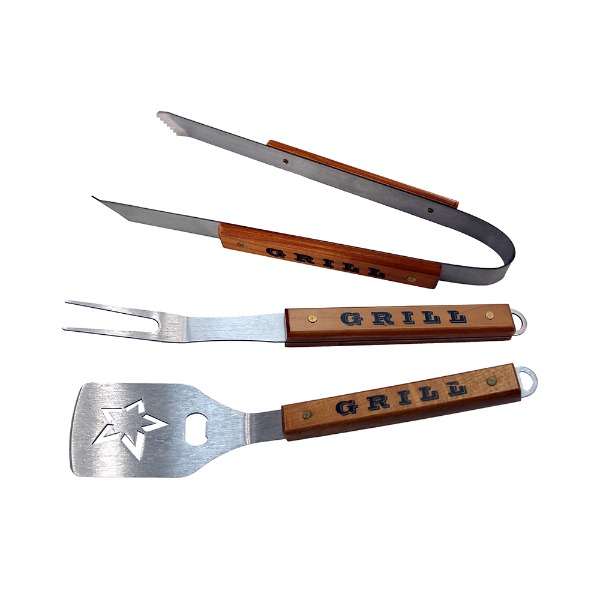
Tongs are arguably the most used item in any barbecue grilling tool set. Unlike forks that pierce meat (releasing juices) or spatulas that struggle with irregular shapes, tongs offer a firm, gentle grip. Look for models with scalloped or ridged edges to prevent slipping, especially when turning sausages or chicken thighs. The ideal length ranges from 16 to 18 inches (40–45 cm) – short enough for precise control, long enough to keep knuckles away from flare‑ups.
Stainless steel construction is non‑negotiable. Plastic or nylon handles may melt if accidentally placed on hot grates, while full metal tongs with silicone inlays on the grips provide both durability and comfort. A locking mechanism is another practical feature, allowing compact storage in a drawer or hanging loop.
Spatula: More Than a Flipper
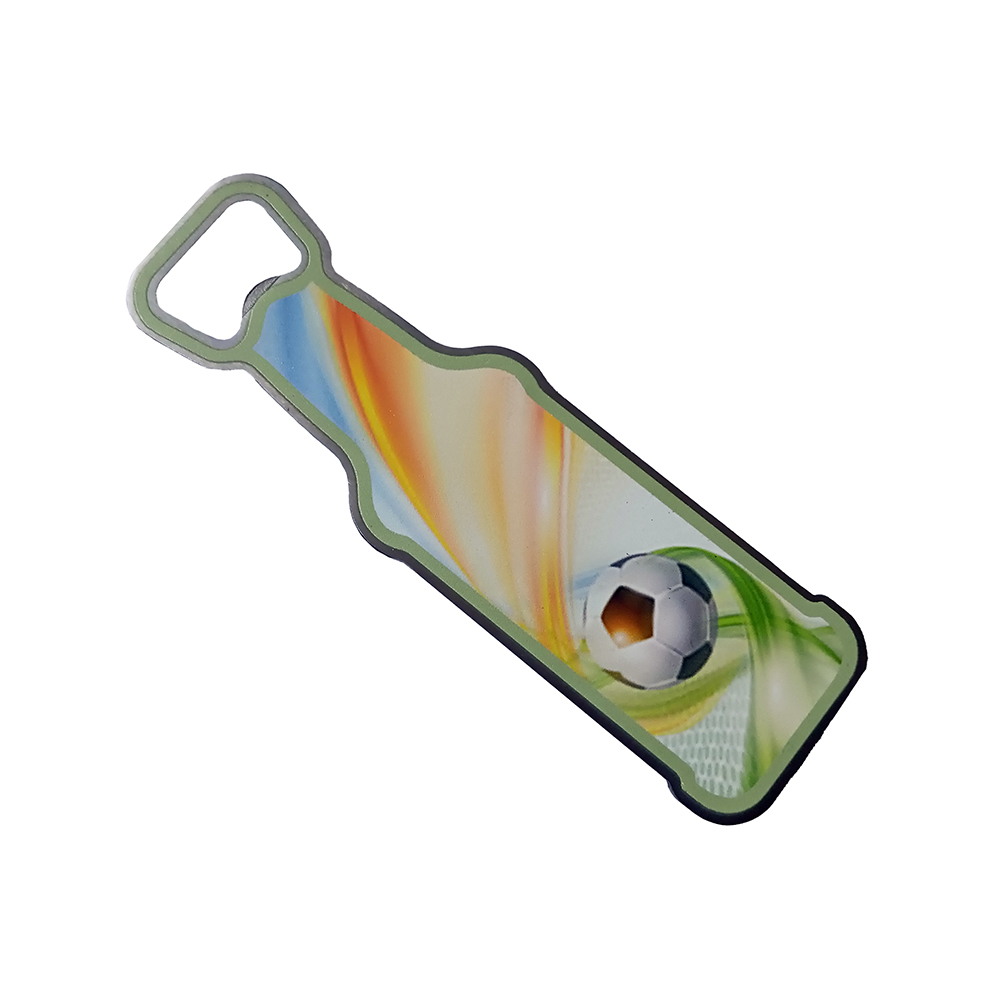
A standard kitchen spatula fails on the grill. The essential grilling spatula has a wider, thinner blade with a beveled front edge, enabling you to slide under burgers or fish fillets without breaking them. Many premium designs include a serrated edge on one side for cutting through small pieces of meat or sausage links, and a built‑in bottle opener – a thoughtful but secondary feature.
The handle should be at least 14 inches (35 cm) long, made from heat‑resistant material such as reinforced nylon or hardwood with a metal core. Perforations or slots in the blade are beneficial because they allow excess fat or marinade to drip back onto the grate, reducing smoke and flare‑ups. Avoid spatulas with wooden handles that are not fire‑treated, as they can char over time.
Grill Fork: Precision Piercing
While tongs and spatulas cover 90% of tasks, a grill fork is indispensable for testing the doneness of roasts, whole chickens, or thick pork chops. The fork should have two long, sharp tines – four tines are unnecessary and increase the risk of tearing meat. A crucial safety feature is a wide, heat‑resistant guard positioned between the handle and the tines. This guard prevents your hand from sliding forward into the heat when you push the fork into dense cuts.
Use the fork sparingly: each piercing creates a small hole through which juices escape. For this reason, high‑quality barbecue grilling tool sets often include a fork as a supplementary tool, not a replacement for tongs or spatulas. It is best reserved for lifting large pieces that are too unstable for tongs (e.g., a whole leg of lamb) or for checking resistance when probing with a finger.
Basting Brush: Flavor Application
Dry rubs are excellent, but wet marinades, butter, and sauces add layers of flavor. A basting brush in a grill set must withstand direct contact with hot grill grates and open flames. Silicone brushes outperform natural bristle types for three reasons: they do not shed fibers onto food, they resist temperatures up to 500°F (260°C), and they are dishwasher safe.
The brush head should have thick, tapered bristles with gaps between them to hold more liquid. Length again matters – an 18‑inch (45 cm) handle keeps your hands safe when basting over high heat. Some sets include a small silicone basting cup or a separate mop brush (ideal for large cuts of meat), but a standard flat brush is sufficient for most home grilling.
Cleaning Brush: Safety Through Hygiene
A clean grate prevents sticking, off‑flavors, and harmful bacterial buildup. The cleaning brush is often overlooked but is a true essential in any barbecue grilling tool set. The safest design uses a stainless steel scraper head with curved wire bristles that are mechanically crimped into the handle – avoid brushes with loose bristles that can break off and embed in food, causing serious internal injuries.
Alternatively, newer brushless scrapers use a coil or a flat paddle with serrated edges. These are safer and last longer, though they require more effort on stubborn residue. Whichever style you choose, the handle must be at least 16 inches (40 cm) long to keep your hands away from residual heat. Clean the grate while it is warm (but not screaming hot) to loosen debris without burning the bristles.
Meat Thermometer: The Science of Doneness
No amount of experience replaces the accuracy of a probe thermometer. Undercooked poultry poses health risks; overcooked steaks waste good meat. A digital instant‑read thermometer is the gold standard. It should have a 4‑ to 5‑inch (10–12 cm) stainless steel probe, a backlit display, and a temperature range from –58°F to 572°F (–50°C to 300°C).
In a complete barbecue grilling tool set, the thermometer may come as a separate probe with a protective sleeve. Some sets include a leave‑in oven‑safe cable thermometer, but for most grilling tasks (burgers, chicken pieces, vegetables), an instant model is more practical. Remember to calibrate it occasionally using an ice water bath (32°F / 0°C) to ensure accuracy.
Skewers and Grill Baskets: Handling Challenging Foods
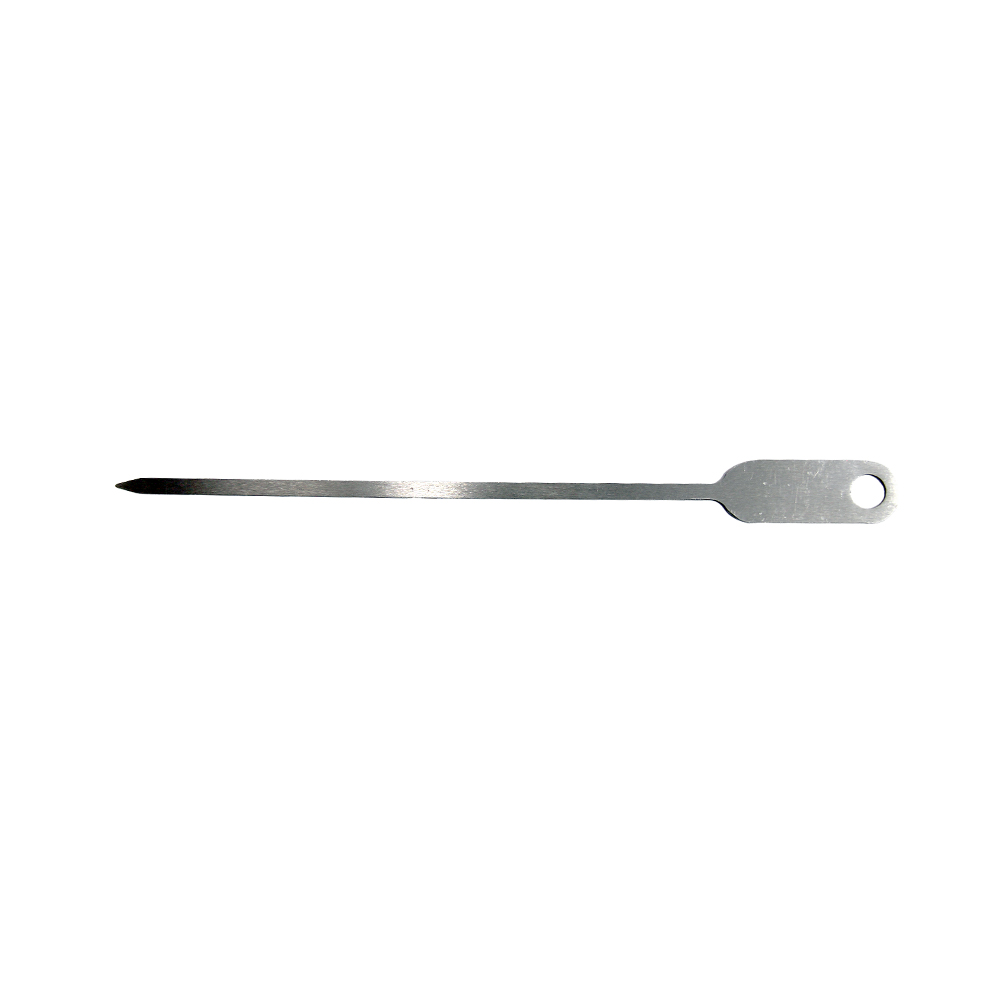
Two additional items found in expanded sets are skewers and grill baskets. Flat metal skewers are superior to round wooden ones because they prevent food from spinning when turned. Look for skewers with a hooked or T‑shaped handle for easy rotation. For vegetables, shrimp, or tofu cubes, double skewers (two parallel shafts) provide better stability.
A grill basket is a wire or perforated metal container with a long handle. It is perfect for small, delicate items that would fall through standard grates: sliced onions, mushrooms, asparagus, or fish fillets. The basket allows you to shake or toss the contents without opening the lid constantly. Choose a basket with a locking latch and a detachable handle for easy cleaning.
Material Quality and Durability
The best barbecue grilling tool sets use 304 stainless steel for all metal parts – it resists corrosion, does not react with acidic marinades, and maintains strength under high heat. Handles may incorporate silicone, hardwood, or reinforced nylon. Avoid plastic handles that are not heat‑resistant, and avoid painted surfaces that can peel or release fumes.
Magnetic tool strips or hanging loops are valuable secondary features. They keep tools organized and within reach, reducing clutter on the grill side table. Some sets also include a heavy‑duty nylon carrying case or a roll‑up pouch – ideal for camping or tailgating.
Storage and Maintenance
Proper care extends the life of any grilling tool set. Wash metal tools with warm soapy water and a soft sponge; avoid abrasive pads that scratch the surface. Silicone brushes and nylon handles are usually dishwasher safe, but check the manufacturer’s guidelines. Dry everything thoroughly before storing to prevent water spots or rust.
Store tongs and spatulas hanging or lying flat. Coiling probe thermometer wires tightly can break internal connections. Replace cleaning brush heads annually or when bristles show signs of deformation. Regularly check for loose screws or rivets, especially on locking mechanisms.
What to Avoid in a Bargain Set
Low‑quality barbecue grilling tool sets often include unnecessary gadgets such as corn holders, mini basting mops, or cheap aluminum skewers. These items dilute the set’s value and take up space. More importantly, bargain sets frequently use chrome‑plated steel (which rusts quickly) or hollow plastic handles that melt. The thermometer in cheap sets is often analog and inaccurate. Always prioritize a smaller set with five to seven high‑quality tools over a 15‑piece kit full of filler items.
Conclusion: Building Your Ideal Set
A complete barbecue grilling tool set is not about having the most tools – it is about having the right ones. The six absolute essentials are long‑handle tongs, a wide spatula, a safe grill fork, a silicone basting brush, a sturdy cleaning brush, and an instant‑read thermometer. Skewers and grill baskets are valuable additions for those who frequently cook vegetables or small items. Focus on 304 stainless steel, heat‑resistant handles of at least 16 inches in length, and a storage solution that keeps everything organized. With these tools in hand, you will achieve better temperature control, safer handling, and more flavorful results – every time you light the charcoal or turn on the gas.
Contact Us

-
No.1129 Yunhe Road, Xiuzhou Industrial Garden, China
 Add.
Add.
-
+86-573-82795217 / +86-13957311130
 Tel.
Tel.
-
[email protected]
 Email.
Follow us.

